
Bending instead of Bracing: A Reflection on Breathwork as a Signal for Regulation
Sarah O'Brien, LCSW

November 8, 2025
Author: Sarah O’Brien LCSW
More Than Holding Our Breath
Bending is something I did for others. Bracing, and tensing, is what I was doing for myself. But I didn’t realize it…for a long time. It was first brought to my attention in the PT office. My physical therapist said “You aren’t breathing properly. You’re holding your breath a lot. And not taking full breaths.” I was surprised, because it certainly seemed as though I was breathing. I mean, I was here, right? Had to still be breathing. Well, there was much to learn about “breathing properly” apparently.
Breathwork As My Nervous System Medicine
This was the first real step I was taking to address my past trauma and the gaping wounds it left-- noticing how I was breathing (or not breathing, seemingly). And then, much practice taking full breaths. As PT homework. Just this tiny step moved me more towards bending rather than bracing. Deep breathing is still my first go-to for many things: grounding, connecting with myself, feeling what’s happening in my body, managing difficult or intense emotions, when I physically don’t feel good, when I need to pause, when something hurts, either emotionally or physically with my body. Deep breathing is probably my favorite option because 1) it works incredibly well in so many different contexts and situations and 2) you can take it anywhere, no props needed.

Breathwork as a portal to self-compassion
After years of hanging out here, I’ve been able to spiral out (or deeper, perhaps) into self-compassion. Compassion for others is not that hard for me. For myself, however, different story. Holding myself to an impossible perfectionism and internal whipping when I messed up, hurt someone, made a mistake, or did something wrong left little room for compassion. Compassion for the human parts of me. I had to dive into my chronic perfectionism tendencies and anxiety born from trauma and never feeling good enough to start extending compassion to myself…for all of the reactions I wish I hadn’t had, for the negative impact I wish I hadn’t caused, and for the years of explaining it (making excuses) instead of addressing it. I really needed some acknowledgement or validation that my experiences were not good, they left me with trauma, and it wasn’t my fault. And I really needed that before I could move on, or spiral out.
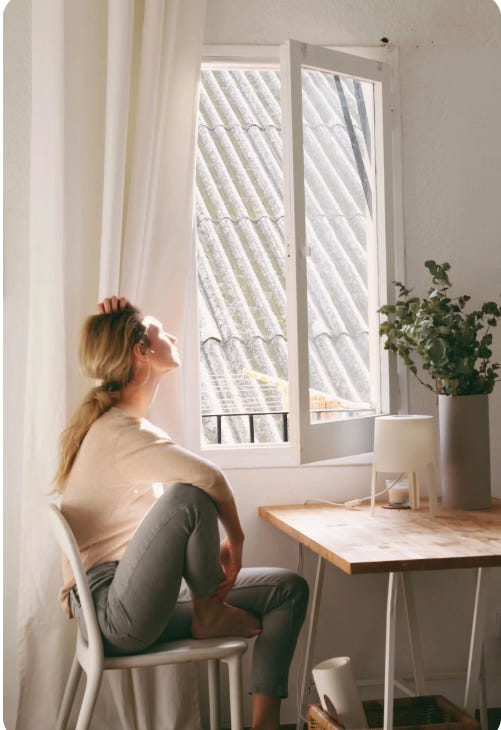
Breathwork to Community Leadership
Thankfully my best friend, my therapist, and my colleagues at Integrate Network were able to do this for me. After I felt seen, heard, and understood (at about 37 years old) I was able to move beyond deep breathing and into other habits and behaviors that were good for me. Like self-compassion. And gratitude. Constant negative outlook and negative experiences make both of these things really difficult, at least for me. I had to be softer with myself, even though no one had ever been soft with me to show me the way. I did not know how to do this but started to try. It looked like: allowing myself to slowly wake up, which led to a better start to my days and better sleep at night; not over-exercising to the point of constant body pain because I was doing too much, and being easy (compassionate) on myself when walking was all I could do; not engaging in an argument when activated by a close relationship, instead saying “I’m not doing this. It’s not good for me,” and stepping away to do something that is good for me. Coupled with these behaviors were self-compassion statements such as: “It’s okay. You’re okay;” “You’re not a bad person for making a mistake;” “It’s okay to be upset right now. What do you need?” I was always waiting for someone to address my needs (because they had never been addressed by someone, not even by my parents and family system in childhood). Slowly, I just started addressing my own needs, and releasing myself from the reactions this caused in others (like my spouse) and stuck to addressing my needs in the moment.
Working in Small Habits to Bigger Shifts
With a skill (deep breathing) and consistent practice with self-compassion statements, I was able to move into gratitude. Again, this is a slow progression, and a slow integration. Part of the self-compassion was honoring, and being nice to myself, the pace with which this was going. For someone with a self-proclaimed ‘realist’ outlook, that really bordered on ‘pessimistic’ outlook (I just didn’t want to admit it) being grateful for things around me was not easy or natural. I’ve been primed and practiced into seeing all the problems, instead of all there was in spite of problems. I would focus on what wasn’t there, what I didn’t have, who I didn’t have, instead on what I did have, what was there, who was there. Again, simple, slow start. For instance, being grateful for my dogs and their constant need for attention, because it felt like real love, and they were funny and would bring a smile to my face; being grateful for having ice cold water all day, as that’s what I like to drink; being grateful amidst all of my physical and emotional discomfort for the ability to work from home, control the office temperature, and wear comfortable pants.
Shifts Happen One Nervous System Habit at a Time
This spiral took at least 6 years, and really more like 8-9 years. Three skills essentially. Deep breathing, self-compassion in the form of more positive and accepting self-talk, and noticing what is versus what isn’t and being grateful to notice those things in my life. Now, it’s not really question of whether I can bend without breaking—I know I can—I just have to do the things that help me bend and not do the things that lead to breaking (now that I know what those are). It’s much easier to say “thank you,” even just inside my head, when my dogs bring joy to my day or I notice how comfortable I am in my home office space. Breathing is still my go-to to get back to this place, it’s what supports me when I forget, and even more imperative, it’s what supports me when people don’t, can’t, or I won’t ask or let them. Then, deep breathing usually leads me back to people who get it, leads me to remembering who those people are in that space I take for deep breaths, then leads me to feeling more grounded because of the breathing. Only then does this allows me to open up and share, and receive support from others. Focusing on what is versus what isn’t is my tagline for boosting gratitude in the moment. I really only get to that place when I stop and take deep breaths, first. And then remind myself, “It’s okay. You’re okay.” Then, with a little more presence and a little more resolve I can ask myself, “What’s here? What do you need?” I end up being grateful for what’s here; then I go and do or find what I need.
Ready to explore how small nervous system habits can help us widen our capacity for connection?
Subscribe to our Newsletter for Weekly Insights from our Affinity Group/App Co-Creators